A newborn can go through several changes of clothes before lunch, and the washing pile tends to prove it. Learning how to wash baby clothes gently is less about creating a complicated laundry system and more about a few dependable habits: checking labels, using an appropriate amount of detergent and choosing cycles that treat small garments with care.
Baby clothes are often made from soft cotton, stretchy blends and delicate trims that do not need harsh treatment to come clean. A simple, consistent approach can help keep everyday items fresh while making the job easier for busy Australian households.
Start by sorting for a gentler wash
Sorting does not have to mean creating six separate piles. For most families, separating baby clothing into lights and darks is enough, especially for new garments that may release excess dye in their first few washes. Keep whites, pale bodysuits and light muslin wraps together, then wash darker colours separately.
It also helps to separate heavily soiled items from lightly worn clothes. A milk-spotted bib or a nappy leak may need a quick rinse before it joins the wash, while clean-looking singlets and sleepsuits can go straight in. This prevents dirt from transferring through the load and means you are less likely to feel tempted to use more detergent than needed.
Fasten press studs, close zips and turn printed garments inside out where practical. Small socks, mittens and bibs are easily misplaced in a large load, so a mesh laundry bag can be useful. It is a small step, but it saves fishing around the washing machine seal later.
Check the care label before washing baby clothes gently
Care labels are there for a reason. While many baby basics can be washed in cool or warm water, some knits, wool blends, special occasion outfits and garments with embellishments need a more careful setting. Follow the temperature and drying instructions on the label, particularly for new items you have not washed before.
A cool wash is often a sensible starting point for everyday baby clothes. It is gentle on colours and fabrics, and modern detergents can dissolve and clean effectively in cold water. A warm wash may be suitable when labels allow it and a load needs extra cleaning, but hotter is not automatically better. Frequent high heat can gradually affect elastic, prints and soft fibres.
If your baby has particularly sensitive skin or you are trying a new laundry routine, consider washing a small load first. This gives you a chance to see how the fabric feels and whether the detergent leaves the clothes comfortably fresh without an overpowering fragrance.
Choose detergent with care, not excess
The right detergent is about suitability and dose, rather than the strongest possible formula. Using too much can leave residue behind, especially in a compact load or a machine that is packed too tightly. Follow the product directions and adjust only when there is a clear reason, such as a larger load or more heavily soiled clothing.
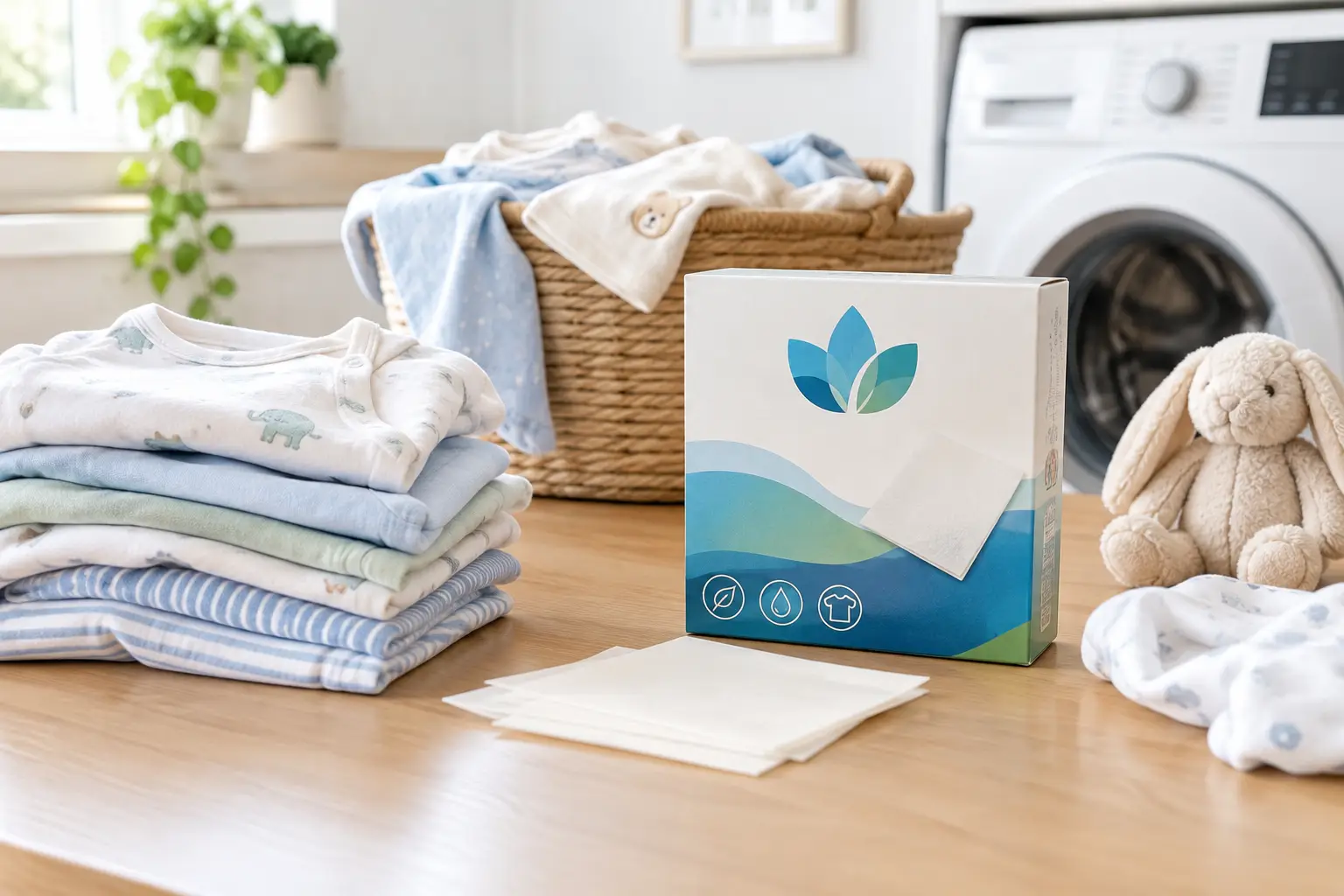
Laundry detergent sheets can be a practical option for baby laundry because they are pre-measured, lightweight and easy to store. For families who prefer to keep fragrance to a minimum, an unscented option is often a straightforward choice. Novalink detergent sheets are designed to dissolve in hot or cold water and can be used in front and top-loading machines, making them convenient for everyday family loads.
Avoid mixing several laundry products unless there is a genuine need. Detergent, fragrance boosters and softeners can quickly turn a simple wash into a trial-and-error process. For most baby clothes, a suitable detergent and a proper rinse are the essentials.
Pick the cycle that matches the load
A normal cycle is usually fine for sturdy cotton bodysuits, socks and everyday towels, provided the label permits it. For softer pieces, lightweight wraps, knitted items or garments with delicate details, choose a gentle or delicate cycle. These cycles generally use less agitation, which helps reduce unnecessary stretching and wear.
Try not to overfill the drum. Clothes need room to move through the water and rinse properly. An overpacked machine can leave items less clean and more creased, while placing extra strain on little fabrics. A good rule is to fill the drum loosely rather than pressing clothes down to fit one more item in.
Washing baby clothes separately can be useful in the early months, especially when there are frequent small loads and plenty of stains. But it is not always necessary. Once you have a reliable routine, baby items can often be washed with other lightly soiled household clothing of similar colours and fabrics. Skip loads containing heavily soiled workwear, rough fabrics or items likely to shed lint.
Deal with stains early, without scrubbing hard
Milk, formula, food and nappy-related messes are part of life with a baby. The most helpful response is usually prompt and calm: rinse the affected area in cool water, then wash it as soon as practical. Leaving stains to dry for days can make them more difficult to lift.
For stubborn marks, check the garment label and use a stain treatment that is appropriate for the fabric. Test it on a hidden area first if you are unsure. Avoid vigorous scrubbing, which can roughen soft cotton or distort knit fabrics. Gentle dabbing and a little patience are kinder to the garment.
Sunlight may help brighten freshly washed white cotton items, but avoid leaving coloured clothing in strong sun for extended periods, as colours can fade. If a stain remains after washing, avoid putting the item in a hot dryer until you have treated it again. Heat can set some stains more firmly into the fabric.
Dry clothes in a way that protects soft fabrics
Drying is where baby clothes can shrink, lose softness or become misshapen if the settings are too harsh. Line drying is a practical option when the weather allows, and it can be especially gentle for everyday cotton items. Shake garments out before hanging them to reduce stiffness and help them keep their shape.
For indoor drying, use an airing rack in a well-ventilated space. In wetter parts of the year, make sure clothes dry fully before folding and storing them. Damp fabric left in a drawer can develop an unpleasant smell, meaning it will need another wash.
A tumble dryer can be convenient when time, weather or laundry volume makes line drying difficult. Use the lowest suitable heat setting and follow the care label. Some items, such as soft knitwear or garments with delicate trims, are better dried flat or on a rack rather than tumbled.
Build a routine that works on tired days
The best baby laundry routine is one you can repeat when sleep is short and the basket is full. Keep a small hamper where changes happen most often, rinse major messes promptly and run manageable loads rather than waiting for an overflowing pile. This can make sorting easier and reduce the chance that stains sit too long.
It is also worth washing new baby clothes, wraps and bedding before first use according to their care instructions. This is a simple way to start with freshly laundered items and establish the settings that work well in your machine.
You do not need a flawless laundry system to care for baby clothes well. A gentle cycle when needed, sensible detergent use, complete rinsing and careful drying will take you a long way. Keep the routine simple enough to use every week, and those tiny clothes will be one less thing to overthink.