
The washing basket has a way of filling up at the worst possible time: Sunday night, before school, or just as you are packing for a trip. Laundry is a regular household job, but it does not need to take over the bench, cupboard or weekend. A few practical habits can make the whole process calmer, quicker and easier to manage – whether you are washing for one person in a unit or a busy family home.
Start with a laundry routine that fits real life
The best routine is not necessarily the most detailed one. It is the one your household can keep up with. For many homes, separating washing into a few simple groups is enough: everyday clothes, towels and bedding, and items needing a gentler cycle. This avoids sorting every individual garment while still helping you choose sensible settings.
Try to wash when you have enough for a worthwhile load rather than running several small cycles each week. A full load, without packing the drum too tightly, gives clothes room to move through the water and detergent properly. Overfilling can leave clothes less clean and more creased, while very small loads can make the task feel never-ending.
Keep a basket or hamper where clothes naturally come off, such as the bedroom or bathroom. If damp towels tend to land on the floor, give them a place to air before they go into the hamper. That small change can help reduce musty odours and make wash day more pleasant.
Read the care label before guessing
Care labels are easy to ignore until a favourite top changes shape or a dark garment fades unexpectedly. They are especially useful for activewear, wool blends, school uniforms, delicate fabrics and clothes with prints or trims. The label tells you the safest washing temperature, whether an item should be washed inside out, and if it is better suited to a gentle cycle.
Cold washing is a practical default for many everyday loads. It can be kinder to colours and fabrics, and modern detergents are designed to dissolve and work in cold water. Hotter washes can still have a place for selected items when their care labels allow it, including some towels, bedding or heavily soiled loads. The right choice depends on the fabric, the level of dirt and the machine instructions.
Choose detergent for convenience as well as cleaning
Detergent should make laundry easier, not add another source of spills, bulky storage or measuring guesswork. Liquids can be useful, but bottles take up space and can drip in cupboards. Powders may need careful scooping and storage away from moisture. Pods offer pre-measured portions, although they also need secure storage, particularly in homes with young children.
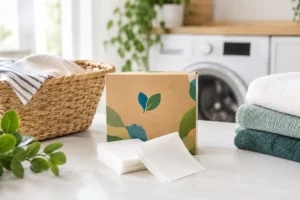
Laundry detergent sheets are a straightforward alternative for people who want a lighter, tidier option. A sheet is pre-portioned, so there is no cap to fill or powder to scoop. It can be placed in the drum with the washing, where it dissolves during the cycle. This is particularly handy in apartments, shared homes, caravans and compact laundries where every shelf matters.
Novalink Trades detergent sheets are designed for hot and cold water, as well as front and top-loading machines. They come in Lavender, Ocean Breeze, Fresh Linen and Unscented options, making it easier to choose a fragrance preference that suits the household. For babies, children or people who prefer less fragrance, an unscented option can be a sensible consideration. As with any laundry product, follow the pack directions and check garment care labels.
Use the right amount, not more
Adding extra detergent does not automatically mean cleaner clothes. Too much can leave residue, create excess suds or require extra rinsing, depending on your machine and water conditions. Pre-measured sheets remove much of that uncertainty, while liquid and powder users should measure according to the product directions and load size.
If clothing regularly comes out feeling stiff, smelling strongly of detergent or showing visible residue, the issue may be product quantity rather than the wash cycle. Try reducing the amount used and avoid overpacking the drum. A regular machine clean can also help if build-up is affecting results.
Deal with stains early, but keep expectations realistic
A fresh spill is generally easier to manage than one that has dried and set. Blot rather than rub a stain where possible, then rinse the affected area with cool water if the fabric allows. For an oily food mark or a muddy knee, treat the area promptly with a suitable stain treatment and wash according to the garment label.
Not every stain has the same solution. Protein-based marks, oils, grass and ink all respond differently, and delicate fabrics need more care than sturdy cotton. Avoid putting an item in the dryer until you are satisfied with the result, as heat can make some stains harder to remove. A second treatment and wash may be needed for stubborn marks.
For white items, it can be tempting to reach for the strongest possible approach. However, repeated harsh treatment can weaken fabric or cause yellowing over time. Start with the gentlest effective method and adjust based on the item and its care instructions.
Make drying part of the plan
Washing is only half of the job. Leaving damp clothes in the machine for too long can lead to a stale smell and more washing later. If you cannot hang clothes out straight away, set a reminder on your mobile so the load does not get forgotten.
Australia’s weather can make line drying easy one week and impossible the next. When conditions are suitable, an outdoor line can help freshen clothes and reduce reliance on a dryer. Turn dark garments inside out to help protect their colour, and avoid leaving clothes in strong sun for longer than necessary. On wet days, an indoor drying rack in a well-ventilated area can be useful. Give garments space so air can circulate rather than layering them over each other.
Dryers are valuable for towels, bedding and urgent loads, but they are not always the best choice for every garment. High heat can be tough on elastic, activewear and delicate fabrics. Check labels, use an appropriate setting and clear the lint filter regularly for better airflow.
Keep the washing machine clean
A machine that does the hard work still needs occasional attention. Detergent residue, fabric fibres and moisture can build up around the drawer, door seal or drum. This may contribute to unpleasant smells and affect future loads.
Once in a while, wipe around the door seal or lid area, remove lint where your machine collects it, and leave the door or lid slightly open after a wash when practical. Run the machine’s recommended cleaning cycle according to the manufacturer’s guidance. If you use a detergent drawer, check it for residue and rinse it clean as needed.
These tasks take only a few minutes, but they can prevent the familiar frustration of clothes emerging from a fresh wash without smelling fresh.
Pack smarter when laundry happens away from home
Travel laundry is often less about finding the perfect setup and more about carrying less. Bulky bottles can leak in a suitcase, are awkward around airline liquid limits and take up room needed for clothes. Compact detergent sheets are easy to pack in a toiletry bag or carry-on, provided they are kept dry.
For a weekend away, bring enough detergent for the washes you realistically expect to do, plus a spare sheet. A small foldable clothesline or a few pegs can be useful when accommodation has limited drying options, though a clean towel and a well-ventilated room will often do for small items. Washing a few essentials during a longer trip can also mean packing lighter from the start.
A simpler laundry setup is not about chasing perfection. It is about choosing products and habits that suit the way your household actually lives. Keep the basket accessible, follow labels when it matters, avoid using more detergent than needed and give each load a chance to dry properly. When those basics are in place, wash day becomes one less thing competing for your time.