
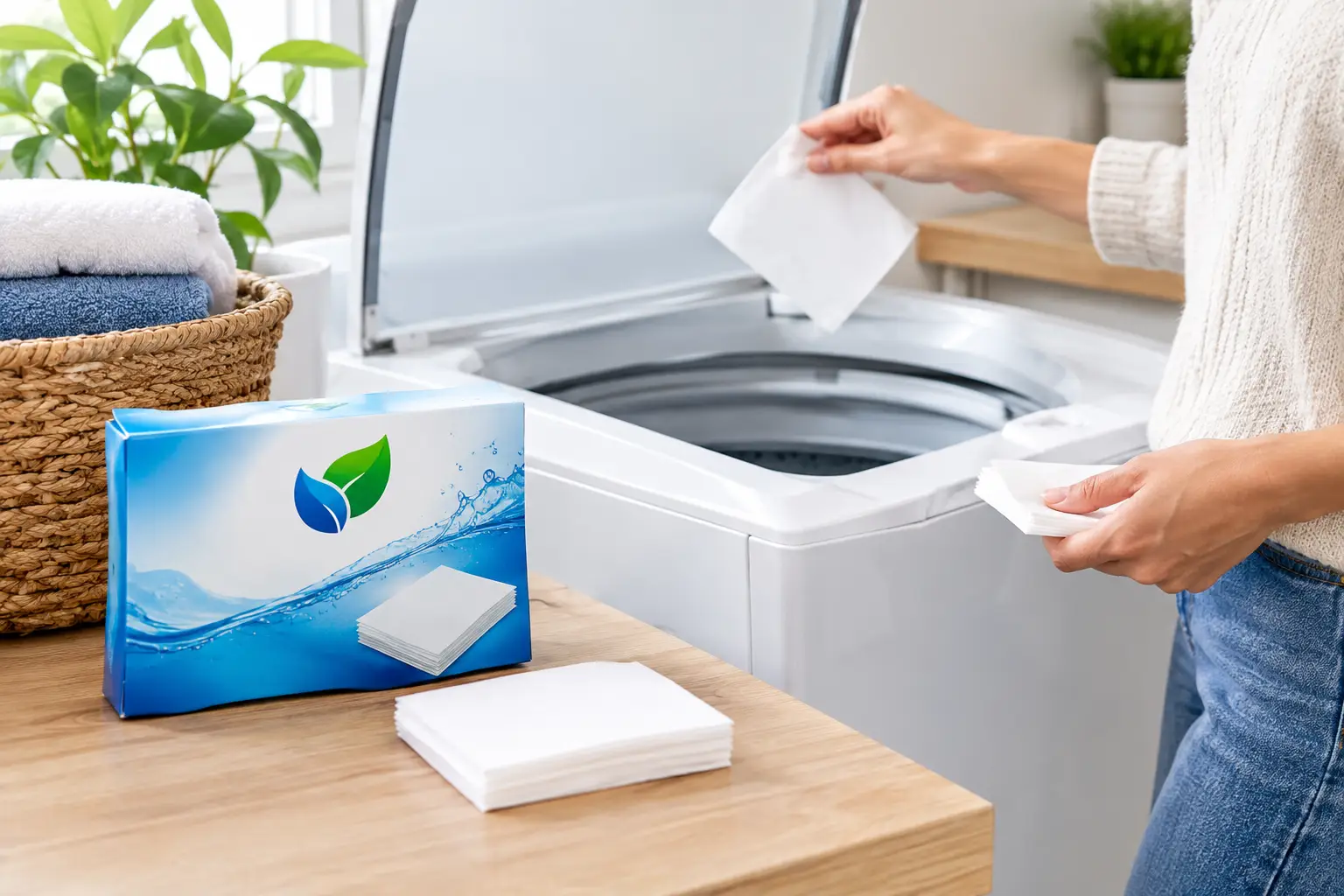
A top loader laundry sheet guide is useful because this style of machine works a little differently from a front loader. The open drum and central agitator in many Australian top loaders can make it tempting to toss everything in at once, but a small change in loading order helps detergent sheets dissolve properly and clean more evenly.
Laundry detergent sheets are a simple alternative to bulky bottles and measuring caps. They are lightweight, tidy to store and easy to take away on holidays, but the best results still come from matching the sheet amount and wash cycle to the load in front of you.
How to use laundry sheets in a top loader
Start by placing the detergent sheet directly into the empty washing machine drum. For top loaders with an agitator, lay the sheet at the bottom of the drum or around the base of the agitator before adding clothes. This gives the sheet early contact with water as the cycle begins.
Then add your washing, spreading larger items around the drum rather than packing everything tightly on one side. A crowded machine can stop water and detergent from moving freely through fabric, regardless of which detergent you use. Leave enough room for the load to shift during the wash.
Choose the water temperature and cycle that suit the care labels on your clothes. Quality laundry sheets are designed to dissolve in hot and cold water, so cold washing can remain a practical everyday choice for lightly soiled clothing. For towels, bedding or heavily worn work clothes, a warmer cycle may be appropriate if the fabric care label allows it.
Avoid placing a sheet in a fabric softener dispenser. Those compartments are designed to release liquid products later in the cycle, which is not where a detergent sheet needs to be. The drum is the right place.
Top loaders with and without an agitator
The same approach generally applies whether your top loader has a central agitator or an impeller plate at the base. Put the sheet in first, then add clothes. In an agitator machine, keep sheets clear of any clothing that is tightly wrapped around the column. In an impeller machine, place the sheet flat on the base so water can reach it quickly.
If your machine has a detergent dispenser, check the appliance manual before using it for sheets. Some dispensers are made for liquid or powder only. Using the drum removes the guesswork and is usually the most reliable option.
How much detergent sheet should you use?
The right amount depends on load size, soil level and your local water conditions. A lightly soiled small load often needs less detergent than a full basket of school uniforms, gym gear and towels. Many detergent sheet packs provide a guide based on half or full sheets, so begin with those directions rather than assuming more detergent always means a better wash.
For an everyday load, use the recommended amount for the machine size and level of soiling. Consider increasing the amount for a large, heavily soiled load, especially if it includes muddy clothes or kitchen towels. If the load is only a few lightly worn items, using less can help avoid unnecessary detergent use.
Hard water can also affect washing performance. If you find clothes feel dull, stiff or not quite fresh after a cycle, it may be worth checking whether your area has hard water and adjusting your routine according to the sheet directions. It is also worth making sure the machine is not overloaded, as this is often the simpler explanation.
Choosing the right cycle for the load
A detergent sheet is only one part of a good wash. Cycle selection matters just as much. A normal or everyday cycle is usually suitable for regular clothes, while a delicate cycle suits lighter fabrics and garments with specific care requirements. Towels and sheets often benefit from a cycle that gives them enough space and movement to rinse thoroughly.
Cold water is a sensible starting point for many Australian households. It is suitable for plenty of day-to-day loads and can be kinder to colours and some fabrics. Warm or hot water may be useful when garment labels permit it and the load needs extra attention, but it is not automatically necessary for every wash.
For families managing frequent loads, keeping a small routine makes laundry easier. Sort whites, darks and delicate items when practical, check pockets before the wash, and avoid leaving damp clothes in the machine for long after the cycle finishes. These basics do more for fresh results than adding extra detergent without a reason.
Common top-loader mistakes to avoid
The most common issue is adding too much laundry. Top loaders can look spacious, particularly deep models, but filling the drum to the brim limits water circulation and can leave items tangled or less thoroughly rinsed. Aim for a comfortably filled drum rather than a tightly packed one.
Another mistake is adding the sheet on top of a mountain of dry clothes. It may still dissolve, but placing it in the empty drum first gives it the best chance to distribute from the start of the wash. This is especially helpful on short cycles and cold washes.
It is also easy to overlook the machine itself. If a washer has a lingering odour, visible residue or a blocked filter, even a well-planned wash may not feel as fresh as expected. Follow your appliance manufacturer’s cleaning advice, wipe around the lid and seals, and leave the lid open after a wash when practical so moisture can escape.
Finally, treat stubborn stains separately. A detergent sheet can handle normal washing well, but stains such as oil, grass, sauce or makeup may need prompt pre-treatment before they go into the machine. Letting a stain set through a hot wash or dryer cycle can make it harder to shift later.
Making laundry sheets work for busy households
Laundry sheets suit routines where storage space and convenience matter. They take up far less cupboard room than large liquid bottles, do not need measuring and are less likely to leave drips on the shelf or floor. That can be useful in apartments, shared houses, caravans or homes where the laundry doubles as a storage area.
For travel, sheets are easy to pack in a bag without worrying about a leaking bottle. They are also a practical option for washing clothes at a holiday rental, laundromat or family member’s home, provided the sheet amount and machine instructions are followed.
Fragrance is a personal choice. Fresh Linen, Lavender and Ocean Breeze can suit people who enjoy a light laundry scent, while unscented sheets are a straightforward option for households that prefer no added fragrance. If you are washing clothes for babies or someone with sensitive skin, follow the product directions and take note of how fabrics feel after washing.
Novalink laundry detergent sheets are designed for both top and front-loading machines, giving households the flexibility to keep one simple detergent format on hand when appliances or living arrangements change.
A good top-loader routine does not need to be complicated: place the sheet in first, avoid overfilling the drum, choose a suitable cycle and give tough stains attention before washing. Once those habits become automatic, laundry takes up less time, less shelf space and far less mental effort.