
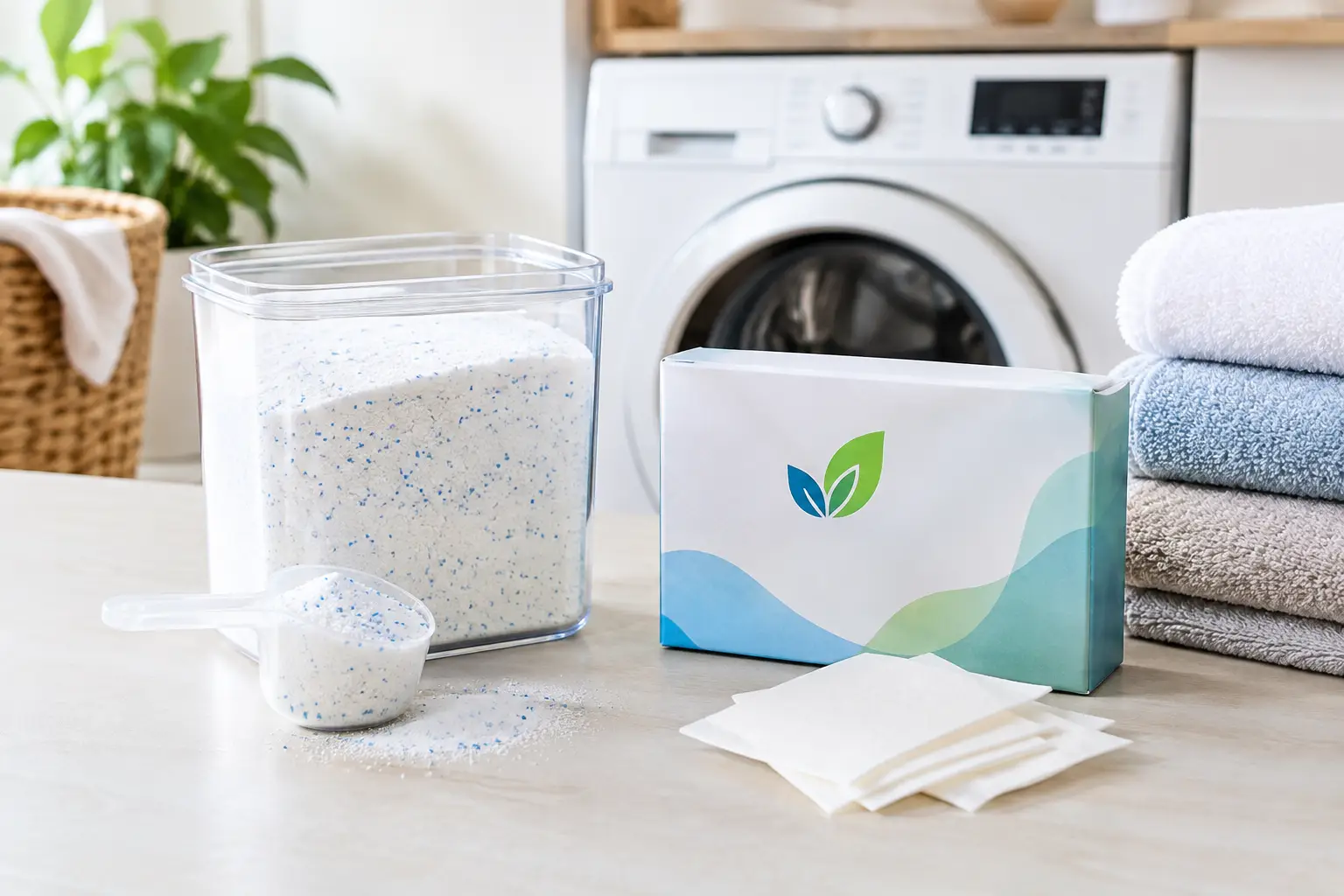
A box of laundry powder can last for weeks, but it can also leave a dusty trail in the cupboard, a scoop to find and occasional residue in the drawer. For busy Australian households, the question is not whether laundry powder works. It is whether it is still the most convenient fit for the way you wash, store and travel.
Laundry habits are personal. Some homes run several loads a week for kids, sport and workwear. Others manage a smaller load in an apartment laundry or rely on shared machines. The right detergent format should suit that routine without adding unnecessary mess or taking up valuable cupboard space.
How laundry powder works
Laundry powder is a concentrated dry detergent. You measure a portion into the machine drawer or drum, then water helps dissolve it during the wash. It is a familiar option, often sold in larger packs, and can be a sensible choice for households that have room to store it and prefer measuring their detergent for each load.
Its performance, however, depends partly on how well it dissolves. In cold water, a heavily filled machine or a short cycle, powder may not always dissolve as readily as expected. That can leave residue in the dispenser drawer, on dark fabrics or around the rubber seal if the machine is not cleaned regularly. Using the recommended amount and avoiding overloading helps reduce this risk.
Powder can also be easy to overpour. A little extra may not feel significant, but repeated overdosing can create excess suds and leave more detergent to rinse away. The most suitable amount changes with load size, soil level and local water conditions, so the scoop is useful only when it is used with care.
Laundry powder or detergent sheets?
Detergent sheets offer a different approach. Each thin sheet is pre-portioned, lightweight and designed to dissolve in hot or cold water. Rather than lifting a bulky box or measuring loose powder, you place a sheet in the empty drum before adding clothes. For a larger or heavily soiled load, follow the product directions for the appropriate amount.
The practical difference is most noticeable on rushed wash days. There is no powder dust on the shelf, no liquid cap to rinse and no need to guess whether the scoop was level. Sheets can be stored neatly in a drawer, which is helpful in smaller homes, rentals, caravans and compact laundry spaces.
That does not make laundry powder unsuitable for everyone. If you are used to buying a large format and have a consistent washing routine, powder may continue to suit your household. The better choice depends on what you value most: familiar measuring and bulk storage, or quick dosing and a tidier routine.
Storage and handling
Laundry powder needs to stay dry. Humidity, damp hands and a poorly closed box can cause clumps, making it harder to measure and dissolve. It is worth keeping the pack off the laundry floor and away from splashes, particularly in compact laundries where the washer, sink and storage all sit close together.
Detergent sheets also need dry storage, but their flat format makes that easier to manage. They take up little room in a cupboard or suitcase and are simple to handle without spills. This can be especially useful for students moving between accommodation, families heading away for a holiday or anyone using a shared laundry.
Washing machine compatibility
Before changing detergent formats, check your machine manual and the product instructions. Laundry powder is commonly added to the drawer or, for some machines and products, directly to the drum. Detergent sheets are generally placed in the empty drum first so they can dissolve properly as water enters the wash.
For front and top-loading machines, the aim is the same: detergent should have enough contact with water to disperse through the load. Avoid tucking a sheet into a tightly packed bundle of clothes, and do not overload the machine. Clothes need room to move for an effective wash and rinse, regardless of the detergent you choose.
Cold washes and short cycles
Cold washing can help care for many everyday garments and may suit routine loads that are not heavily soiled. But cold water gives powdered products less assistance when it comes to dissolving. If you notice grainy residue, first check that you are not using too much powder and that the drawer is clean and flowing freely.
Detergent sheets are made for convenience in both hot and cold water, making them a practical option for households that mainly use cooler settings. Still, a very short cycle, an overloaded drum or poor machine maintenance can affect results with any detergent. The detergent matters, but so do the basics of washing well.
Choosing a scent that suits your home
Scent is one of the easiest ways to make laundry feel fresh, but it is not essential for everyone. Some people enjoy a light fragrance on towels and bedding, while others prefer unscented washing for baby clothes, sensitive skin or simply because they do not want fragrance competing with their perfume or home products.
A useful approach is to choose based on the people wearing the clothes, not just the smell in the packet. Keep an unscented option on hand if someone in the household prefers fewer fragranced products. For everyday loads, a scent you enjoy can make folding and putting clothes away feel a little more pleasant.
Novalink detergent sheets are available in Lavender, Ocean Breeze, Fresh Linen and Unscented options, so households can select a format and fragrance that suits their routine. The sheets come in plastic-free packaging and are designed to be lightweight, mess-free and simple to store.
Getting better results from any detergent
The best detergent format cannot compensate for a washer that is overfilled or clothes left damp in the machine for hours. Small changes to your routine often make a visible difference to cleanliness, freshness and fabric care.
Sort light and dark colours when practical, especially for new garments that may release dye. Treat noticeable stains before washing rather than expecting a standard cycle to handle everything. Check pockets for tissues, coins and lip balm, then choose a cycle that matches the fabric and soil level instead of automatically using the quickest setting.
Use the recommended detergent amount rather than adding extra for reassurance. More detergent does not necessarily mean cleaner clothes. It can make rinsing harder and may leave fabrics feeling less fresh. Finally, give your machine some attention: wipe the door seal, clean the dispenser drawer and run the maintenance cycle recommended by the manufacturer.
When each option makes sense
Laundry powder may suit you if you prefer a traditional detergent, regularly wash larger loads and have dry, accessible storage. It can be a straightforward part of a stable household routine, particularly when you are comfortable measuring the right amount for each wash.
Detergent sheets may be the better fit if you want less clutter, pre-portioned dosing and easier laundry on the move. They are particularly handy for apartment living, holidays, laundromats and homes where the laundry cupboard is already doing too much work.
There is no need to make laundry more complicated than it is. Choose the detergent format that helps you start the load without a second thought, then let good washing habits do the rest.