
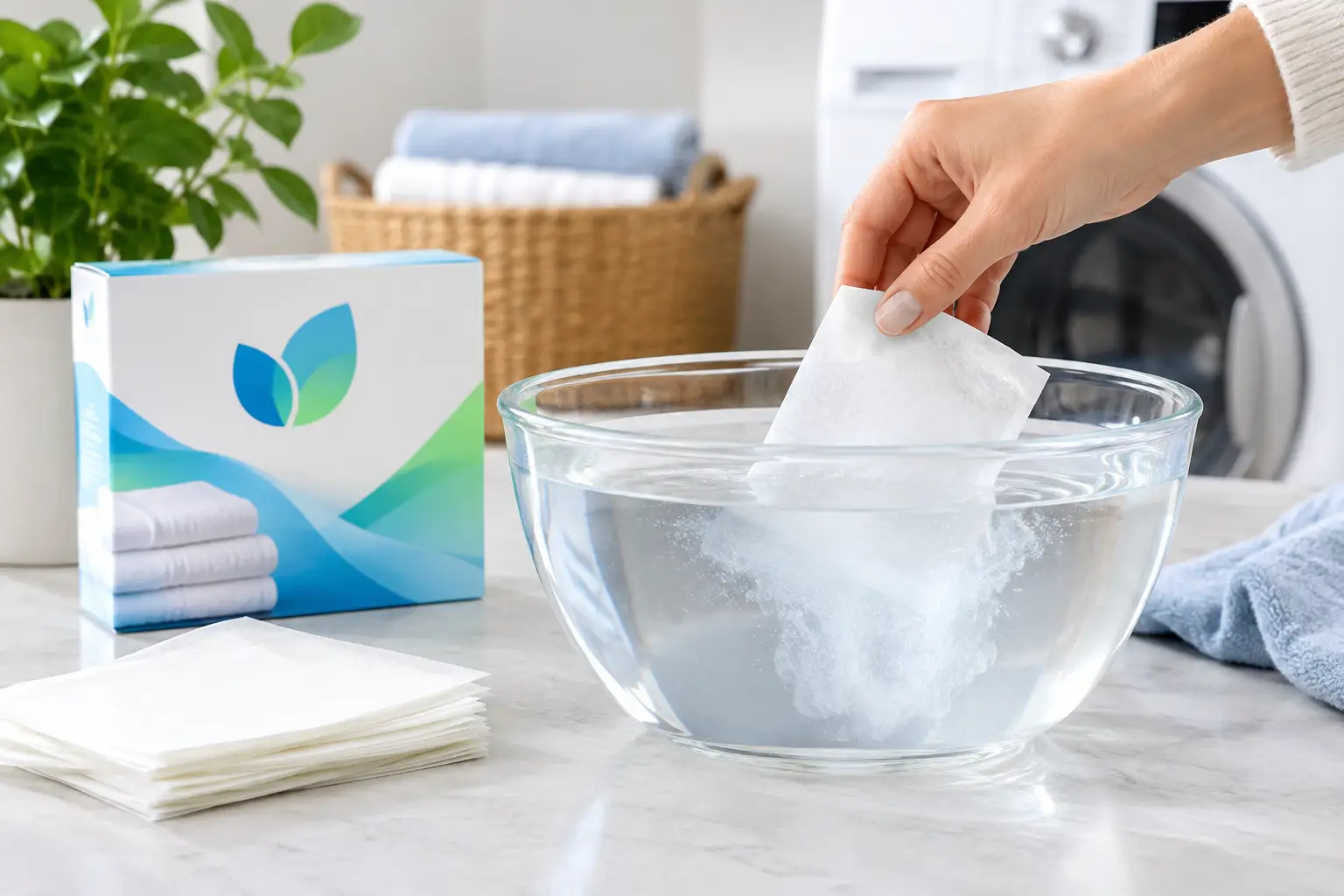
A detergent sheet that is still visible at the end of a wash is understandably frustrating. So, do laundry sheets dissolve? Yes – quality laundry detergent sheets are made to dissolve in water and distribute detergent through the wash. However, how well they dissolve can depend on water temperature, load size, machine type and where the sheet is placed.
For most everyday loads, a sheet should dissolve during the wash cycle in both cold and warm water. That is one reason detergent sheets are a practical alternative to bulky bottles: there is no measuring, pouring or cleaning up drips. A little care with placement and loading helps ensure you get the best result every time.
How do laundry sheets dissolve?
Laundry sheets are thin, concentrated detergent strips. Once they come into contact with water and the movement of the washing machine, they begin to break down and release cleaning ingredients into the wash water.
Unlike a detergent pod, a laundry sheet does not rely on a thick outer casing. Its lightweight format allows water to reach the sheet quickly. In a normal wash, the sheet softens, separates and dissolves as the drum turns or the agitator moves.
Cold water is not usually a problem. Modern detergent sheets are formulated for cold washing as well as warmer cycles, which is useful for Australian households that choose cool washes for day-to-day clothing. A warm or hot cycle may speed up dissolving, but higher temperatures are not required simply to use a sheet.
That said, every product formula is different. Always check the directions on the pack, particularly if you are using a very short cycle, washing in unusually cold water or trying a new machine setting.
Do laundry sheets dissolve in every washing machine?
Laundry sheets can be used in both front-loading and top-loading machines, but placement matters. The simplest approach is usually to place the sheet directly into the empty drum before adding clothes. This gives it the best chance to meet water early in the cycle rather than being trapped in a tightly packed bundle of washing.
For a front loader, put the sheet at the bottom or back of the drum, then add your clothes. For a top loader, add the sheet where it can mix freely with the water before or as you add the load. Avoid folding the sheet into a small ball or wedging it inside a pocket, sock or fitted sheet.
Unless the product directions specifically say otherwise, do not put detergent sheets into the dispenser drawer. These drawers are designed differently from machine to machine, and a sheet may not receive enough water flow there to dissolve as intended.
What can stop a laundry sheet from dissolving properly?
When a piece of sheet remains after a wash, it does not always mean the detergent has failed. Often, it has been caught in fabric folds or has not had enough room and water movement to break down fully. A few common conditions can make this more likely.
An overfilled drum
Packing a machine to the brim leaves little space for water and clothes to circulate. This can affect any detergent, but it can also cause a laundry sheet to become pressed between garments. Leave enough room for the load to move comfortably. As a general guide, you should be able to place a hand across the top of the washing without forcing it in.
A very short or low-water cycle
Quick cycles are handy when you need a few items washed in a hurry, but they use less time and sometimes less water. A detergent sheet may still work well in these settings, although a heavily soiled or larger load is better suited to a standard cycle with enough time for detergent to circulate.
Some water-saving settings can also reduce the amount of water available at the beginning of a wash. If you repeatedly notice sheet fragments, try selecting a normal cycle and placing the sheet directly in the drum first.
Thick, tangled items
Doona covers, towels, sheets and bulky winter clothing can wrap around each other, creating dry or low-flow areas in the load. A sheet caught inside a folded fitted sheet may not dissolve as evenly as one placed freely in the drum. Shake out large items and avoid rolling them tightly before washing.
Using more detergent than the load needs
More detergent is not always better. For a small or lightly soiled load, using a full sheet when the pack recommends less can leave excess detergent in the wash. Follow the dosing guidance, and adjust for the size of the load and how dirty the clothes are.
If a sheet is perforated, tear it cleanly along the line rather than scrunching or layering several pieces together. This helps each portion contact water more evenly.
Getting the best results in cold washes
Cold washing is a sensible everyday choice for many clothes, particularly colours, activewear and delicate fabrics. To help a detergent sheet dissolve well on a cold cycle, put it into the empty drum before the clothes and do not overload the machine.
Choose a cycle that gives the load enough time to move through the water. For a standard basket of clothing, the regular cotton, mixed or everyday setting is often more suitable than the shortest available cycle. If your machine offers an extra rinse, that can also be useful when washing very full loads, towels or items that hold a lot of water.
Very cold tap water can vary by season and location. During a colder spell, give the sheet a little more opportunity to dissolve by choosing a longer cycle rather than automatically turning up the temperature. This keeps the wash routine simple while treating your clothes according to their care labels.
How many laundry sheets should you use?
The right amount depends on the product instructions, your load size and the level of soiling. For many detergent-sheet products, one sheet is intended for a regular load, while a larger or dirtier load may need more. A half sheet can be a practical option for a small wash when the pack directions allow it.
Think about what is in the machine, not just how full it looks. A drum full of lightly worn T-shirts may need less detergent than a smaller load of muddy kids’ clothes, gym gear or kitchen towels. Using the recommended amount helps rinse the load cleanly and avoids wasting detergent.
If you find a sheet fragment after washing
First, check whether the fragment is actually stuck inside a larger item. It is common for lightweight material to catch in a fitted sheet, a towel fold or the corner of a doona cover. Remove it, give the item a quick rinse if needed, and adjust the next load rather than assuming the machine or detergent is unsuitable.
If it happens more than once, try these practical changes: place the sheet in the empty drum first, reduce the load size, select a longer cycle and make sure the sheet is not folded or trapped. It is also worth checking that your washing machine is filling and draining normally, as poor water flow can affect the performance of any detergent.
For households using Novalink laundry detergent sheets, the same everyday approach applies. The sheets are designed to dissolve in hot and cold water and work in front and top loaders, making them easy to use at home, in a unit laundry or while travelling.
A well-loaded machine and a correctly placed sheet are usually all you need. Once those small habits become part of your routine, laundry sheets can keep wash day lighter, less messy and easier to manage.