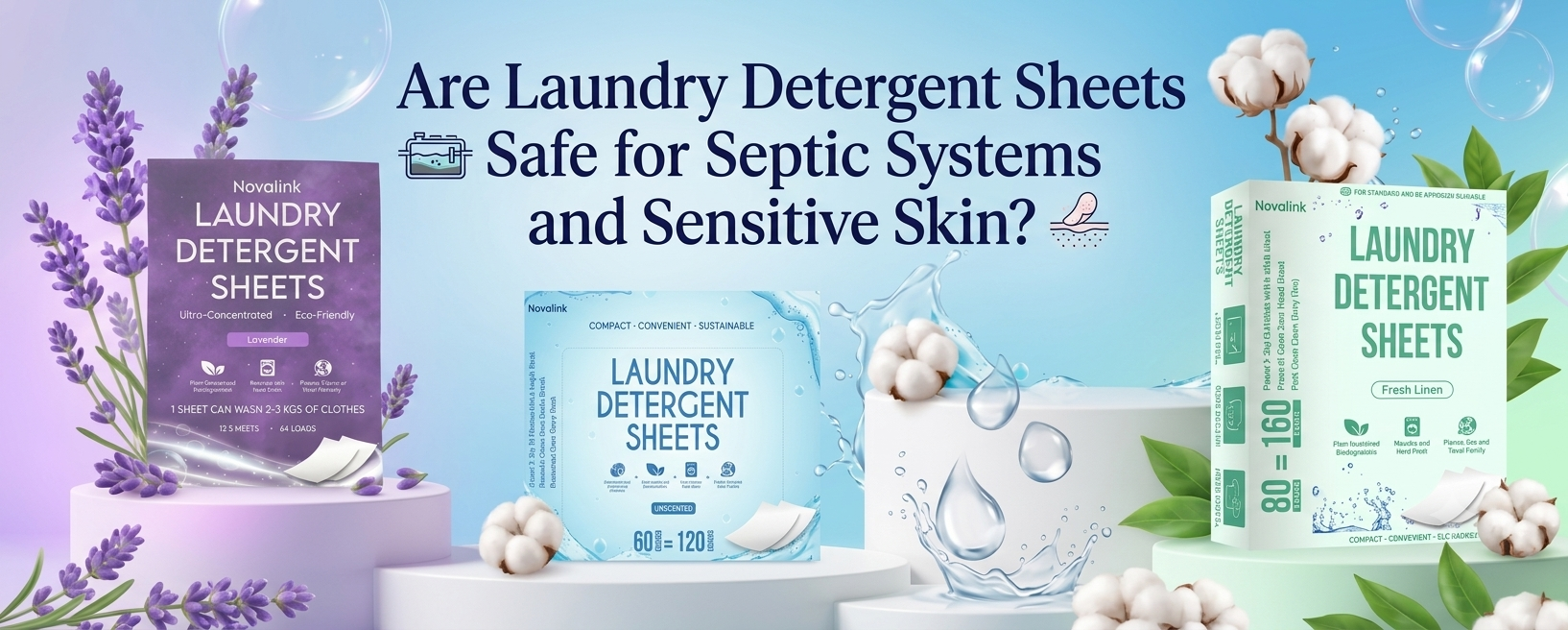
Are the septic safe laundry detergent sheets, actually safe for sensitive skin? Two questions come up more than almost any other when people are deciding whether to switch to laundry detergent sheets — not vague reassurance, but literal ‘will this damage my septic tank’ and ‘will this give my kid a rash’ concerns.
Everything else in the post stays exactly as written — the H2 “What Actually Makes a Detergent ‘Septic Safe’?” already has the exact phrase, so that one didn’t need changing. With these five spots updated (title, permalink, meta description, H1, opening line), the exact phrase now appears in every field Rank Math actually scores against, not just implied through natural variations like “safe for septic systems.
How Septic Systems Actually Work — and Why Detergent Matters
A septic system relies on a colony of bacteria to break down waste in the tank before the treated water moves out to the leach field. That bacterial balance is fairly delicate. Anything that disrupts it — excessive suds, harsh chemicals, or detergent residue that doesn’t fully dissolve — can throw the system off over time, leading to slower drainage, unpleasant odours, or in worse cases, a leach field that clogs and needs expensive repair.
This is exactly why “septic-safe” isn’t just marketing language — for a household actually relying on one, it’s a real, practical requirement.
What Makes a Laundry Detergent Septic-Safe
A few specific properties actually matter here, not just a general “eco-friendly” label:
Full dissolvability. Anything that leaves solid residue behind can build up in the tank over years of use.
Low-sudsing formula. Excess foam can interfere with the settling process a septic tank relies on to separate solids from liquid.
No phosphates. Phosphates that leach into the surrounding soil and waterways can contribute to algae blooms — a genuine environmental concern well beyond just the tank itself.
No chlorine bleach. Bleach is directly harmful to the bacterial colony a septic system depends on to function.
Biodegradable ingredients. The faster and more completely something breaks down, the less strain it puts on the system over time.
Are Laundry Detergent Sheets Safe for Septic Systems?
Generally, yes — and this is one of the genuine advantages of the sheet format over some traditional liquid and powder detergents. Because sheets are formulated to dissolve completely, are typically low-sudsing, and (in Novalink’s case, and many others in the category) are free from phosphates and chlorine bleach, they tend to align well with what septic system guides recommend looking for in a septic-safe laundry product.
That said, “laundry sheet” alone isn’t an automatic guarantee — it’s still worth checking the specific formula rather than assuming every sheet on the market meets the same standard, the same way you’d check any liquid or powder detergent’s ingredient list.
What “Hypoallergenic” Actually Means for Laundry Products
“Hypoallergenic” doesn’t have a single strict legal definition, but in practice, for laundry products, it generally means the formula is free from the specific ingredients most commonly linked to skin irritation and allergic reactions: added dyes, synthetic fragrances (or heavy fragrance loads), parabens, phosphates, chlorine bleach, and optical brighteners.
This matters most for babies, anyone with eczema or a diagnosed skin sensitivity, and people who react to synthetic fragrance generally — but honestly, a genuinely hypoallergenic formula tends to be gentler on everyone’s skin, sensitive or not, simply because there’s less in it to react to in the first place.
Novalink’s Approach to Both
Novalink’s hypoallergenic laundry detergent sheets are built from coconut-derived surfactants, corn and potato starch, soapbark saponins, vegetable glycerin, and sodium citrate — with lavender or fresh linen essential oils for scent, or a completely unscented option if you’d rather skip fragrance altogether. They’re explicitly free from added dyes, parabens, phosphates, chlorine bleach, and optical brighteners, and are safe for sensitive skin, kids, babies, and septic systems alike.
Every pack also comes with a 30-day money-back guarantee, no return shipping required — if it doesn’t agree with your skin or your system, you’re not stuck with it.
If you’re not sure whether the switch will suit your household, a smaller, plastic-free pack is a low-risk way to test it before committing to a larger one.
Signs a Detergent Might Not Be Septic- or Skin-Safe
A quick checklist worth running through on any product, not just laundry sheets:
- It doesn’t fully dissolve, or leaves visible residue on dark fabrics.
- The label lists chlorine bleach or doesn’t disclose whether phosphates are included.
- It has a strong, synthetic fragrance rather than a light natural scent — or no fragrance disclosure at all.
- The brand doesn’t publish a full ingredient list anywhere you can check.
Frequently Asked Questions
Can I use laundry detergent sheets in a septic tank?
Yes, in most cases — sheets that dissolve fully, are low-sudsing, and are free from phosphates and chlorine bleach are generally considered septic-safe, the same as an equivalent liquid detergent with those same properties.
Are laundry detergent sheets safe for babies?
Formulas that are free from added dyes, parabens, phosphates, chlorine bleach, and optical brighteners — like Novalink’s — are generally considered safe for babies’ clothing and delicate fabrics. If your baby has a diagnosed skin condition, it’s still worth checking with your GP or dermatologist before switching any laundry product.
What does “hypoallergenic” mean on a laundry detergent label?
It means the formula excludes the ingredients most commonly linked to skin irritation — there’s no single regulated legal standard behind the word, so it’s worth checking the actual ingredient and “free from” list rather than relying on the label alone.
Do septic-safe detergents cost more than regular ones?
Not necessarily. Independent testing has found laundry detergent sheets clean comparably to standard liquid detergent, and pricing is generally in the same range — you’re not paying a premium for the septic-safe formulation itself.
The Bottom Line for Septic Safe laundry detergent sheets
If you’re weighing up a switch to laundry detergent sheets and either a septic system or sensitive skin is part of that decision, the format itself has genuine advantages on both fronts — but it’s still worth checking the specific formula rather than assuming every sheet on the shelf qualifies. Read more about why we started Novalink, or head to the shop to see the full ingredient list and try Lavender, Fresh Linen, or Unscented for yourself.